The Silk Blueprint · Signed in Doha
A Tale of Two Capitals
Doha spent twenty years proving a sequence. On 3 September, Tashkent signed for it. Five years, to 2031.
By Nisha Varman · Founding Editor, SilQRoute Times ·
Thirty years ago a newly independent Uzbekistan introduced itself to the world the way most young states did, by sending its objects abroad. The 1990s European project behind Heirs to the Silk Road: Uzbekistan presented the country as an inheritance, arranged in a line. A decade later Bright Flowers brought Uzbek textiles and applied arts to the Powerhouse Museum in Sydney, organised with the Ministry of Cultural Affairs. Both were careful, generous and, by the standards of the time, successful.
Both also worked to a twentieth century assumption, that culture is something a state lends rather than something a state builds with. The objects moved, the narration stayed with the host institution, and when the crates went home the country's position in the global cultural conversation was roughly where it started.
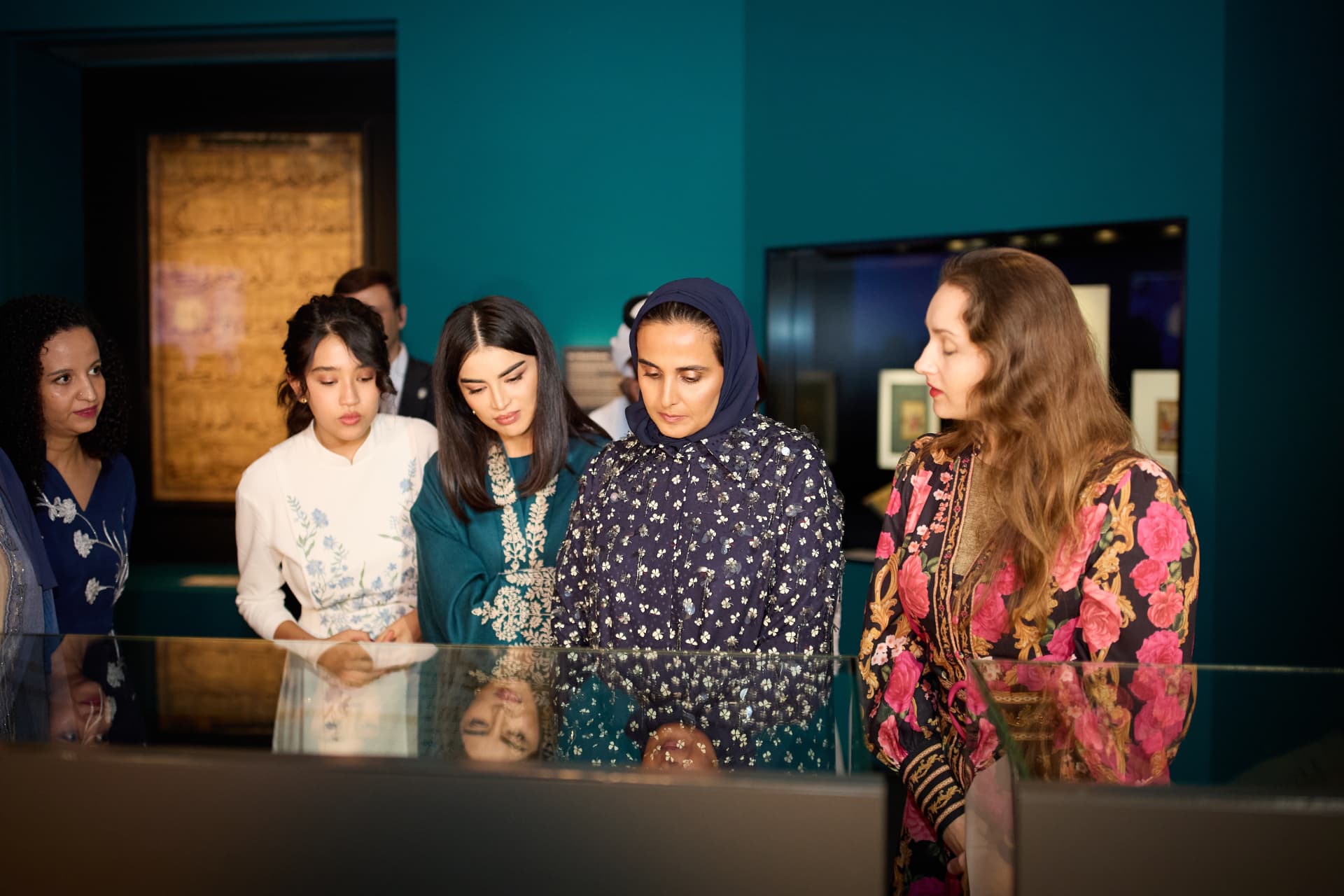
On Thursday 3 September 2026, in Doha, something structurally different was signed. Qatar Museums and Uzbekistan's Art and Culture Development Foundation agreed a five year cooperation framework, reported the same evening by Qatar News Agency. HE Dr Maryam bint Ali bin Nasser Al Misnad, Minister of State for International Cooperation and a Qatar Museums board member, signed for Qatar, with ACDF chairperson Gayane Umerova signing for Uzbekistan. Qatar Museums chairperson HE Sheikha Al Mayassa bint Hamad bin Khalifa Al Thani said that investing in culture is an investment in people, and that the agreement links heritage preservation to talent development.
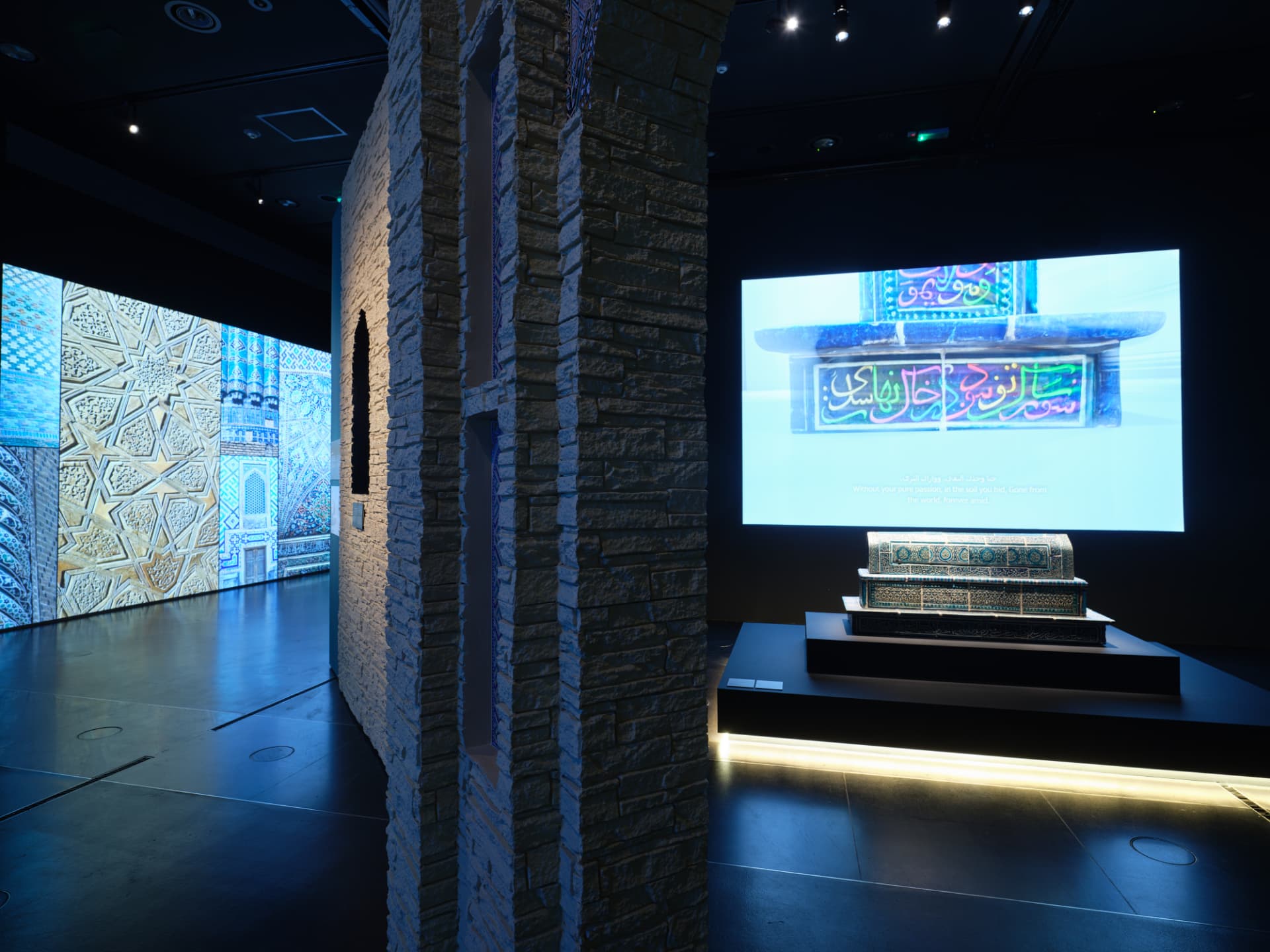
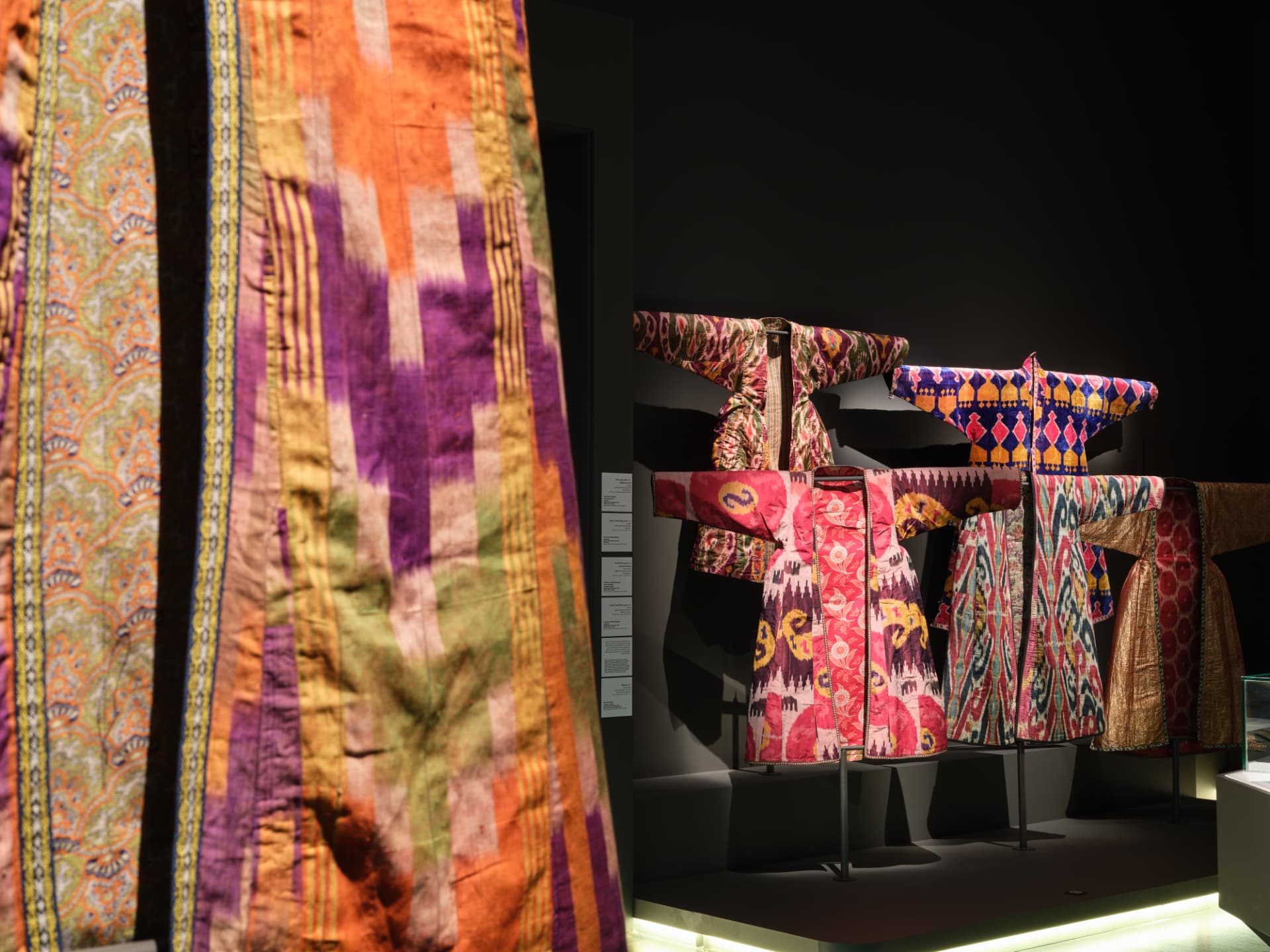
Read next to the two Uzbek exhibitions that opened at the Museum of Islamic Art the same week, it files easily under cultural programming. Read next to what Uzbekistan has been building at home, it looks like the transfer of a method.
Why Qatar, and why now
Uzbekistan arrived at this table with its own leverage. A country with 11.7 million annual visitors, a reforming financial sector and one of the deepest heritage collections in the Islamic world had several partners to choose between, and it chose the one whose sequence it recognised. Doha spent two decades turning collections into institutions in public view, which makes the method legible rather than theoretical. Two capitals with the same ambition picked each other.
That is the first reason the timing reads deliberately. As the old certainties of a single-centre world loosen, middle powers are building their own alliances rather than waiting to be included in someone else's. Autonomy without capability stays theoretical. A five year framework that produces curators, conservators and a functioning institutional calendar is capability, and it belongs to Uzbekistan at the end of it.
The second reason is older. The Gulf and Central Asia are treated in most catalogues as separate subjects, one filed under the modern Middle East and the other under the post-Soviet space. On the ground they are one continuous arena with a shared civilisational library, and the manuscripts now on view in Doha make that case more efficiently than any communique. Choosing each other is a way of saying so out loud.
The Doha method, from exhibition to ecosystem
When institutions measure cultural impact they usually reach for the fair model, commercial, transactional, segmented by category and calendar slot. Qatar took a different route, and the difference is structural rather than stylistic. Here a show is planned in the same process as the museum estate around it, the metro line that reaches it, the national carrier whose network makes a weekend trip plausible from three continents, the tourism marketing that treats a season as inventory, and the schools and residencies programme that gives the domestic audience a reason to come twice.
The measurable end of that system is ordinary enough to check. Qatar Tourism recorded 5.1 million international visitors in 2025, up 3.7 per cent, with the GCC supplying 35 per cent of them. That is not a number an exhibition produces. It is a number exhibitions sit inside.
For Qatari readers this is not an abstraction. It is the argument that a state can be hypermodern without becoming generic, and that heritage held to an international standard at home is a sovereign asset rather than a nostalgia exercise. Ektashif: Uzbekistan, in which Qatari artists worked in Tashkent, Samarkand and Bukhara before making new work, is the part of the programme that shows the traffic running both ways. Qatar is not only hosting Uzbekistan's material culture at the Museum of Islamic Art. It is acting as the launch platform for how that culture is read globally.
Culture as the front door to the corridor
To read this relationship only through art is to miss the load-bearing part. Culture is the facade. Institutional trust is the foundation, and trust is what makes multi-sector integration move quickly between two middle powers.
The evidence for that sits in the trade file rather than the arts pages. On a working visit to Doha in June 2026, Uzbekistan's Minister of Investment, Industry and Trade Laziz Kudratov met Qatari ministers and the heads of the Qatar Investment Authority, Qatar Development Bank, the Qatar Fund for Development, the Free Zones Authority and Qatar Industrial Manufacturing Company. His ministry reported agreement to launch projects across transport infrastructure, education, logistics, chemicals, energy, agriculture and tourism, with delivery roadmaps to follow. That is a full-spectrum list, and it was assembled by two states already used to appearing on each other's platforms.
Finance follows the same pattern. The Central Bank of Uzbekistan is standing up an Islamic finance framework with a Sharia advisory council, and Qatari practice has been publicly discussed as a reference for that build, including in a Gulf Times commentary in April 2026. As Tashkent develops its next generation of urban and financial infrastructure, Gulf expertise in Sharia-compliant structuring is the capability most obviously in demand. Cultural familiarity does not sign the term sheet, but it shortens the distance to the room where one is signed.
Three cities, three mandates, one calendar
Uzbekistan's opening under President Shavkat Mirziyoyev is described domestically through the language of ochiqlik, openness. In cultural policy it has produced something unusually legible: a split-screen strategy in which each city carries a different job.
Tashkent, the intellectual engine. The Center of Islamic Civilization, eight years in construction, was inaugurated by the President on 17 March 2026, combining manuscripts, research facilities and public galleries. The Centre for Contemporary Arts Tashkent, an ACDF project by Studio KO inside a 1912 tram depot, was named among TIME's World's Greatest Places 2026 and opens this month. One building anchors the scholarly claim, the other the contemporary one.
Samarkand, the diplomatic core. The city hosted the 43rd session of the UNESCO General Conference from 30 October to 13 November 2025, the first time that conference met in Central Asia. In October 2024 the Qatar Fund for Development signed a grant of 4,175,000 US dollars to restore the Bibi Khanym mosque complex, delivered with the Aga Khan Trust for Culture. Conservation finance plus multilateral hosting is how a historic city becomes a standing venue rather than a stop on a tour.
Bukhara, the living avant-garde. The inaugural Bukhara Biennial, commissioned by Gayane Umerova, ran from 5 September to 23 November 2025 and drew more than half a million visitors in its opening month alone. In June 2026 the architect Kulapat Yantrasast was appointed artistic director of the second edition, scheduled for 3 September to 21 November 2027. Recruiting at that level two years ahead is a scheduling signal the international art calendar reads immediately.
The visitor data suggests the sequencing is landing. Uzbekistan received 11.7 million foreign visitors in 2025, 46.8 per cent more than the year before, on National Statistics Committee figures. Qatar Airways has flown Doha to Tashkent since June 2024, which is the unglamorous connective detail that turns two cultural calendars into one itinerary.
The pattern, in one line
Culture becomes national strategy when it is planned in the same room as transport, aviation, tourism, finance and education. Qatar demonstrated the sequence. Uzbekistan is the first country adopting it wholesale, with Qatari institutions inside the process rather than watching it.
Authorship, which is the actual asset
For most of the modern period the story of Islamic material culture has been narrated from outside the societies that made it, in catalogues written elsewhere and hung under other people's themes. What changes when Doha presents Uzbek collections at this standard, and when Bukhara commissions its own biennial, is not the quality of the objects. It is who holds the pen.
That is the part that compounds. A loan exhibition ends. An institutional framework produces curators, conservators, registrars, catalogue writers and, eventually, a domestic audience that expects this standard as normal. Five years is roughly how long it takes for a first cohort of that kind to become senior enough to matter, which is presumably why the agreement runs to 2031.
There is a market reading too. Samarkand as a spiritual and diplomatic centre of gravity, and Tashkent as an intellectual one, gives the wider Islamic world a second axis alongside the Gulf rather than a rival to it. Both states gain from that. Neither is trading on hydrocarbons or cotton in this particular conversation, which is precisely the point.
The operators' verdict
For anyone building a destination, a fund, a hospitality group or a brand along this corridor, the lesson is about order of operations. Culture does not generate standing because it is beautiful. It generates standing when a visitor can arrive, understand, stay, spend and return, and when a citizen sees their own inheritance treated with international seriousness at home.
Ochiqlik opened the door. Adopting Qatar's holistic sequencing is what turns an opening into a permanent position. Nation branding is no longer a matter of hosting an exhibition and hoping the world notices. It requires transport, hospitality, art, finance and policy moving in lockstep.
Qatar proved the sequence. Uzbekistan is running it on its own terms, and the pen stays in the region. The new Silk Road is being built in culture, and this time the crates are not going home empty.
Sources & references(14)Show
- 1.Qatar News Agency, carried by The Peninsula and Qatar Tribune, 3 September 2026. Qatar Museums and Uzbekistan's Art and Culture Development Foundation signed a five year cooperation agreement in Doha on Thursday 3 September 2026. It was signed by HE Dr Maryam bint Ali bin Nasser Al Misnad, Minister of State for International Cooperation and Qatar Museums board member, and ACDF chairperson Gayane Umerova, and covers capacity building, creative industries and Islamic heritage conservation, including residencies, professional training and joint exhibitions.
- 2.Qatar News Agency, carried by The Peninsula, 3 September 2026. Qatar Museums chairperson HE Sheikha Al Mayassa bint Hamad bin Khalifa Al Thani said that investing in culture is an investment in people, and that the partnership links heritage preservation with talent development for creative professionals working internationally.
- 3.Qatar News Agency, carried by The Peninsula and Qatar Tribune, 3 September 2026. Uzbekistan: Heritage in Motion is on view at the Museum of Islamic Art in Doha from 3 September to 28 November 2026, presented alongside Ektashif: Uzbekistan, original works by Qatari artists made after a research journey to Tashkent, Samarkand and Bukhara.
- 4.Qatar Fund for Development, project announcement, 3 October 2024. The Qatar Fund for Development and the Art and Culture Development Foundation signed a grant agreement worth 4,175,000 US dollars in October 2024 to restore the Bibi Khanym mosque complex in Samarkand, delivered with the Aga Khan Trust for Culture.
- 5.Ministry of Investment, Industry and Trade of Uzbekistan, via YUZ.uz, 22 June 2026. On a working visit to Doha in June 2026, Uzbekistan's Minister of Investment, Industry and Trade Laziz Kudratov met Qatari ministers and the heads of the Qatar Investment Authority, Qatar Development Bank, the Qatar Fund for Development, the Free Zones Authority and Qatar Industrial Manufacturing Company. The two sides agreed to launch projects in transport infrastructure, education, logistics, chemicals, energy, agriculture and tourism, with roadmaps to follow.
- 6.International Finance, 1 April 2026, and Gulf Times opinion by Nurmukhammad Sultonaliev, 30 April 2026. The Central Bank of Uzbekistan is building an Islamic finance framework, including a Sharia advisory council, and Qatari Islamic banking practice has been publicly discussed as a reference model for that work.
- 7.Euronews Culture, 19 March 2026. President Shavkat Mirziyoyev inaugurated the Center of Islamic Civilization in Tashkent on 17 March 2026, a complex eight years in construction combining manuscript collections, research facilities and public exhibitions.
- 8.TIME, World's Greatest Places 2026, and YUZ.uz, 4 September 2026. The Centre for Contemporary Arts Tashkent, an Art and Culture Development Foundation project designed by Studio KO in a converted 1912 tram depot, was named among TIME's World's Greatest Places 2026 and is scheduled to open in September 2026.
- 9.Design Anthology, 7 November 2025, and ArtAsiaPacific, 25 December 2025. The inaugural Bukhara Biennial, commissioned by ACDF chairperson Gayane Umerova, ran from 5 September to 23 November 2025 and drew more than half a million visitors in its first month.
- 10.ArtAsiaPacific and ARTnews, 4 June 2026. Kulapat Yantrasast was named artistic director of the second Bukhara Biennial on 4 June 2026, scheduled to run from 3 September to 21 November 2027.
- 11.Thames and Hudson catalogue record and Powerhouse Museum collection records. Heirs to the Silk Road: Uzbekistan accompanied a 1990s European museum project presenting the newly independent republic's material culture, published by Thames and Hudson in 1997. Bright Flowers, a loan exhibition of Uzbek textiles and applied arts organised with Uzbekistan's Ministry of Cultural Affairs, was shown at the Powerhouse Museum in Sydney in 2005.
- 12.UNESCO, 43rd General Conference. The 43rd session of the UNESCO General Conference was held in Samarkand from 30 October to 13 November 2025, the first time the conference met in Central Asia.
- 13.Kun.uz, 20 January 2026, and Qatar Tourism 2025 Annual Performance Report. Uzbekistan received 11.7 million foreign visitors in 2025, 46.8 per cent more than in 2024, according to the National Statistics Committee. Qatar received 5.1 million international visitors in 2025, up 3.7 per cent, with the GCC supplying 35 per cent of arrivals.
- 14.Tashkent Times, 3 June 2024. Qatar Airways began scheduled services from Doha to Tashkent on 2 June 2024.
Photography by SilQRoute Times and Qatar Museums, Doha, September 2026. This is an independent editorial analysis. It is not sponsored and no payment or consideration was received from any institution named. Institutional and financial claims are attributed to the named published sources listed above.